 Leading well often means living in more than one time horizon at once.
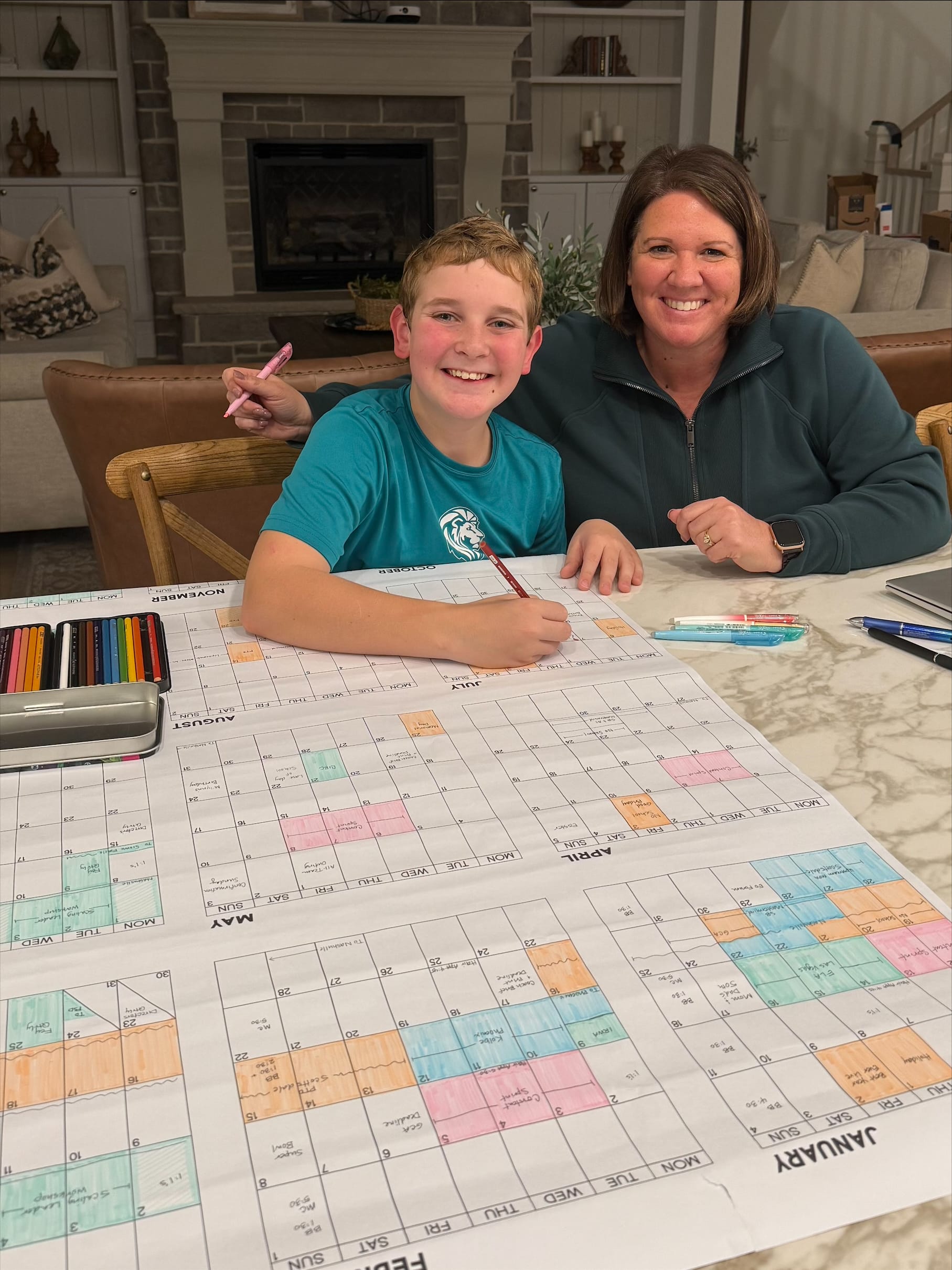
A few nights ago, my son and I were sitting at the kitchen island with a stack of markers and a giant wall calendar spread out in front of us. The kind that takes up the entire counter.
It was January through December of 2026.
We were color-coding the year together. Travel. School breaks. Big work commitments. Family time. The rhythms that shape our days long before they arrive.
To him, it was a fun project. To me, it was familiar work.
I’ve been thinking about 2026 for months now. Not because I want to rush past today, but because leading well requires living ahead of the moment you’re in. Decisions made now quietly shape capacity, pace, and pressure later. And if I don’t spend time there intentionally, I end up paying for it in the present.
Leaders are time travelers.
We live in multiple time horizons at once. We’re responsible for what’s happening now, while also holding what’s coming next. Most of our teams are rightly focused on executing today’s work. Leaders, on the other hand, are constantly moving between the future and the present—sometimes within the same hour.
That tension isn’t a sign you’re doing it wrong. It means you’re leading.
If you are going to lead effectively while planning for what’s next, you’ll need a way to move intentionally between time horizons. Here are three practices that help leaders plan ahead, stay grounded in execution, and communicate clearly across both.
Practice #1: Plan for the Future on Purpose
Planning for the future isn’t something you squeeze in when the calendar allows. It’s not a luxury or a side project. It’s a core responsibility of leadership.
What I see, again and again, is leaders who want to think ahead but don’t protect the space to do it. The future stays vague. The plan stays informal. And then the present fills every available inch of capacity.
This often shows up as reactive leadership. Decisions get made in the moment because there’s nothing concrete to point back to. Priorities shift quickly. The team feels whiplash, even if no one can quite name why.
Planning on purpose means being clear about which horizon you’re actually working in. Annual planning. Quarterly focus. Long-term vision. These aren’t abstract exercises. They are how you reduce decision fatigue later.
When the future is clarified ahead of time, the present becomes easier to lead. You’re no longer asking, “What should we do?” every week. You’re asking, “Does this align with what we already decided?”
This is not about predicting everything correctly. It’s about giving yourself a reference point so you’re not starting from scratch each time something changes.
Practice #2: Lead the Present with Discipline
The opposite mistake happens just as often.
Some leaders live so far in the future that they disconnect from what’s actually happening right now. They’re energized by ideas, vision, and possibility, but impatient with execution. The day-to-day feels small compared to what could be.
The problem is that businesses don’t move forward on vision alone. They move forward on consistent follow-through.
Leading the present with discipline means staying engaged with reality. Projects. People. Constraints. Progress. Problems that need to be addressed before they become patterns.
This is where leadership becomes less glamorous and more grounded.
It’s checking in on the things you planned months ago and asking, “Is this actually happening the way we intended?” It’s noticing when execution is lagging and resisting the urge to jump to the next idea instead.
Discipline here doesn’t mean micromanagement. It means stewardship. Paying attention. Holding the line. Helping your team close the gap between intention and reality.
The leaders who do this well don’t abandon the future. They simply refuse to use it as an excuse to ignore the present.
Practice #3: Communicate Across Time Horizons Intentionally
This is where most breakdowns occur.
Leaders are often carrying information their teams aren’t ready—or required—to carry yet. That’s not secrecy. That’s discernment.
At the same time, when leaders spend a lot of time in the future, they can unintentionally under-communicate about what’s happening now. The team is left filling in gaps, guessing priorities, or reacting to partial information.
Communicating across time horizons means translating, not just sharing.
It means being clear about what matters now, what’s coming later, and what’s simply being explored. Not everything in your head needs to be shared. But what does need to be shared should be shared clearly.
I’ve found it helpful to be explicit about the horizon I’m speaking from. “This is a decision for this quarter.” “This is something we’re planning for next year.” “This is an idea, not a commitment.”
That simple framing reduces confusion and anxiety. It helps teams stay focused on execution without feeling blindsided by future shifts.
It also builds trust. People don’t need all the answers. They need to understand how to orient themselves to the information they’re being given.
When leaders fail to do this, teams either feel overwhelmed by too much future talk or frustrated by a lack of clarity in the present. Neither is healthy.
Communicating intentionally across time horizons is how you bring others along without asking them to carry weight that isn’t theirs to carry.
The Work No One Sees
Time travel is invisible leadership work. No one applauds it. It doesn’t show up neatly on a task list. But when it’s missing, everyone feels the cost.
This isn’t about doing more or carrying everything alone. It’s about being honest about where you’re operating—and leading each horizon with intention instead of default.
Where are you currently spending most of your leadership energy—and what might change if you allowed yourself to lead both the future and the present more deliberately this year?
ABOUT THE AUTHOR
Courtney De Ronde

Relevant Posts



Learn What Your Business Needs Most to Unlock Faster Growth
Your business relies on four key areas, or centers of intelligence, to thrive. Take the free Business Intelligence Grader to see how you score across financial, leadership, productivity, and human intelligence and learn where to focus to drive greater results.
Your business relies on four key areas, or centers of intelligence, to thrive. Take the free Business Intelligence Grader to see how you score across financial, leadership, productivity, and human intelligence and learn where to focus to drive greater results.