 What a road trip taught me about leading differently as the business grows.
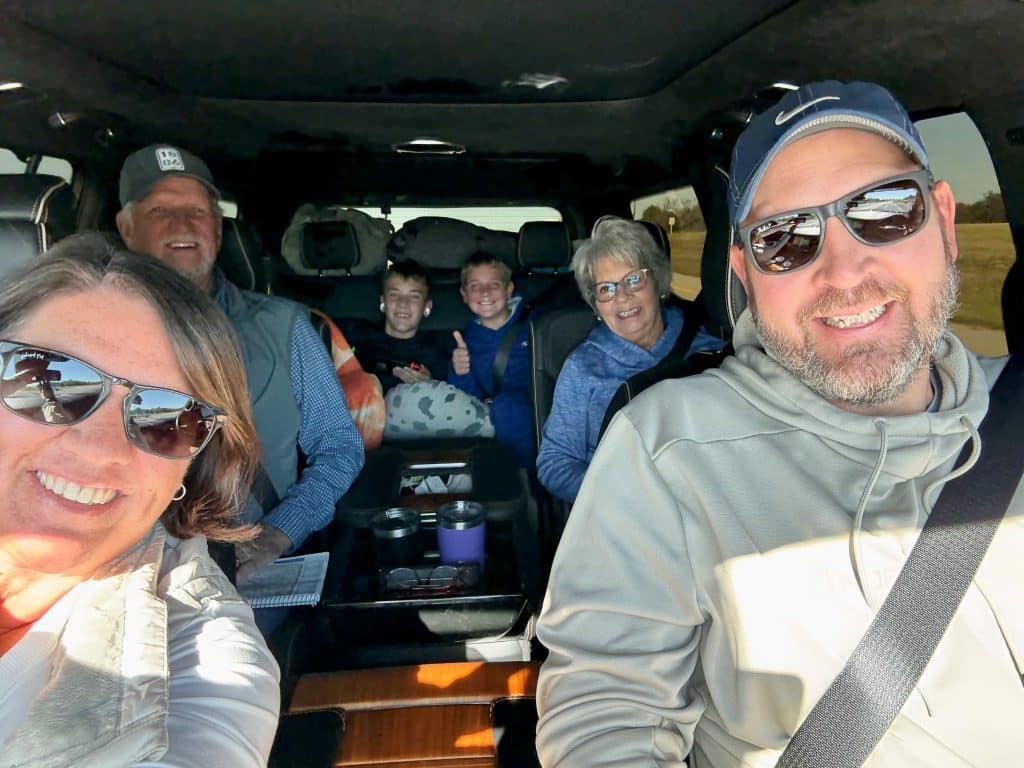
On our ten-hour drive to Nashville last week, my husband was behind the wheel, I was routing with Apple CarPlay, and my dad was in the back seat — following along with a spiral-bound road atlas.
Every so often, he’d flip a page, trace our route with his finger, and announce, “Looks like we’ll hit the Kentucky border in about thirty minutes.” He wasn’t wrong. His atlas showed the big picture — the zoomed-out direction of where we were headed.
But it couldn’t tell us when to take the next exit, warn us about a slowdown, or reroute around traffic. It didn’t know the road had changed. And it struck me: leadership can feel a lot like that.
The bigger your business grows, the faster everything moves — decisions, people, and information. Yet most of us are still leading with the same systems and habits that got us here. They worked when the company was smaller, but now they struggle to keep pace.
The map that helped you reach this level won’t help you navigate the next one. You can’t lead your next level of growth from the same environment that created today’s complexity.
Every stage of growth demands a new level of leadership—and a stronger structure to sustain it. As your business expands, your leadership systems have to expand with it — how you make decisions, develop people, and stay aligned.
When Growth Outpaces Leadership
Most leaders try to evolve while staying fully immersed in the daily mechanics of their business — solving problems, reviewing numbers, jumping from meeting to meeting. The organization keeps running, but it’s running through them.
At some point, that model stops scaling. You can keep the plane in the air, but you can’t upgrade the engine while you’re flying it.
I’ve lived that tension. I’ve invested in great coaching programs and conferences. And when I came home, the pace and complexity of the business swallowed my best intentions before anything could take root.
The real constraint wasn’t strategy, it was structure. My business had outgrown the leadership model it was built on. Until I equipped other leaders to own decisions, we were never truly going to scale.
That kind of transformation doesn’t happen in the middle of the daily rush. That’s why stepping out of your everyday environment matters so much. Whether it’s a workshop, retreat, or even a full day of blocked time, perspective requires distance. You can’t see the pattern while you’re still inside it.
Once you recognize that growth requires new structure, the question becomes: what kind of environment will help you create it? There’s no one-size-fits-all. The right rhythm depends on the kind of complexity you’re leading through.
Choosing the Right Kind of Growth Environment
Each kind of growth environment has its place. The key is choosing what fits your current level of complexity.
MASTERMIND
What It Is: A circle of peers who challenge your thinking and share what’s really working.
When you Need It: You need fresh perspective and exposure to new ideas from leaders who’ve scaled beyond where you are now.
What It Gives You: Insight + inspiration
Caution: Great for sparking ideas, but often light on frameworks to help you operationalize them. Most leaders eventually need more structure and accountability to turn insight into progress.
GROUP COACHING
What It Is: A guided process with shared structure and accountability.
When you Need It: You’ve outgrown your original systems and need a proven framework to align your team and execute more consistently.
What It Gives You: Clarity + momentum
Caution: You only get the value if you show up, stay engaged, and apply the tools between sessions.
1:1 COACHING
What It Is: Personalized strategy and ongoing support from someone who knows your goals and helps you navigate growth.
When you Need It: You need focused guidance to design new structures, strengthen leadership capacity, or accelerate a major shift.
What It Gives You: Focus + transformation
Caution: Deep focus, but no built-in peer community — you’ll need to find connection elsewhere.
It’s not about choosing one forever. It’s about rhythm. Most leaders find the greatest transformation in a blend — the shared structure of a group to build systems and accountability, paired with 1:1 coaching to personalize the work and sustain it over time.
The best leaders create a cadence that includes intentional time away from the whirlwind to reset, and structured connection in between to stay aligned.
What Happens When Your Get It Right
When your growth environment matches your current level of complexity, leadership stops feeling reactive and starts feeling strategic.
You stop chasing more information and start building alignment — the kind that changes how your organization operates, not just how you think. You come home (or log off) with clearer priorities, renewed focus, and systems that actually scale.
Reflection
Take a minute to name your current season:
Do you need perspective from leaders farther ahead?
Do you need a clearer structure and rhythm to scale effectively?
Do you need focused, personal guidance to navigate increasing complexity?
Or some combination — a rhythm that helps you think bigger and lead more strategically?
Whatever your answer, be intentional about your growth environment. Choose one that gives you real-time visibility, sharper alignment, and the structure to lead what’s next.
ABOUT THE AUTHOR
Courtney De Ronde

Relevant Posts



Learn What Your Business Needs Most to Unlock Faster Growth
Your business relies on four key areas, or centers of intelligence, to thrive. Take the free Business Intelligence Grader to see how you score across financial, leadership, productivity, and human intelligence and learn where to focus to drive greater results.
Your business relies on four key areas, or centers of intelligence, to thrive. Take the free Business Intelligence Grader to see how you score across financial, leadership, productivity, and human intelligence and learn where to focus to drive greater results.